Tangem hardware wallet
July 27, 2026
In a context where cryptocurrency self-custody is becoming increasingly important, security and ease of use have become key factors in driving mass adoption. Tangem aims to address this challenge with a different approach: a card-shaped hardware wallet designed to simplify access to the crypto world while maintaining high security standards.
In this interview, we speak with Azul from Tangem’s marketing team about the origins of the project, the technology behind its devices, the security measures they have implemented, the challenges of educating new users, and the upcoming developments that will shape the company’s future. We also explore how Tangem views the evolution of self-custody and the role they hope to play in the growth of the Web3 ecosystem.
How did the idea of creating a card-shaped wallet come about? What problem were you trying to solve?
The idea came from a very simple observation: for most people, traditional hardware wallets are too complicated. Between seed phrases, small screens, cables, and technical setup processes, many users ended up keeping their cryptocurrencies on exchanges simply because it felt easier.
At Tangem, we wanted to create an experience as simple as using a bank card. Our goal was to remove the barriers to self-custody and allow anyone to protect their digital assets in less than two minutes.
What sets Tangem apart from other similar solutions?
Our main difference is the user experience. Most hardware wallets were designed by engineers for technically advanced users. We designed Tangem with everyday users in mind.
We don’t use batteries, cables, or screens. The wallet works by simply tapping the card against a smartphone using NFC technology. We also removed the need to manage a seed phrase during the initial setup, which is often one of the biggest sources of mistakes for users.
In addition, we provide a fully integrated mobile experience, allowing users to buy, sell, swap, stake, and access financial services directly through the app.
What type of user do you have in mind: beginners or advanced users?
Both.
Beginner users get an extremely simple experience that allows them to start using self-custody without feeling overwhelmed by technical concepts.
At the same time, advanced users appreciate features such as full control over their private keys, the ability to import existing wallets, support for thousands of assets, staking, access to DeFi, and compatibility with multiple blockchain ecosystems.
If someone has never used a hardware wallet before, why should Tangem be their first choice?
Because it is probably one of the simplest ways to start with self-custody.
There is no need to learn complex concepts before getting started. The setup process takes only a few minutes, and the overall experience is highly intuitive. We believe security should not be limited to expert users.
Tangem allows anyone to take control of their digital assets without facing a steep learning curve.
How do you balance simplicity and security in the user experience?
Our approach has been to hide the complexity without compromising security.
Behind a very simple user experience lies a highly robust security architecture. Private keys are generated directly inside the card’s secure chip and never leave it. Users do not need to understand every technical detail in order to benefit from an extremely high level of protection.
The best security is the security that people actually use. That is why we believe simplicity and security are not opposing concepts, but complementary ones.

What security mechanisms does Tangem use to prevent someone from duplicating or copying a card?
Private keys are generated inside the secure chip and cannot be extracted or copied.
Each card includes a certified chip specifically designed to withstand both physical and digital attacks. Even if someone gained physical access to the card, they would not be able to duplicate the private keys stored inside it.
In addition, the authenticity of the card can be cryptographically verified through the Tangem app, allowing users to confirm that they are using a genuine device.
Why did you choose an EAL6+ certified chip, and what advantages does it provide in terms of security and user experience?
The EAL6+ certification is one of the highest security standards used in the industry.
These types of certifications are commonly found in biometric passports, banking systems, and government applications. For us, it was important to use technology that has been tested and audited by independent laboratories.
The benefit for users is straightforward: they can trust that the security of their assets is backed by hardware specifically designed to protect critical information.
How does Tangem handle privacy? Are user data collected?
Privacy is one of our core principles.
Tangem does not require users to create accounts in order to use the wallet, and the company has no access to users’ private keys or funds. Tangem cannot freeze assets, reverse transactions, or access users’ wallets.
Our goal is to ensure that users maintain full control over their digital assets without relying on third parties.
If a user loses their card or their phone breaks, how can they recover their funds?
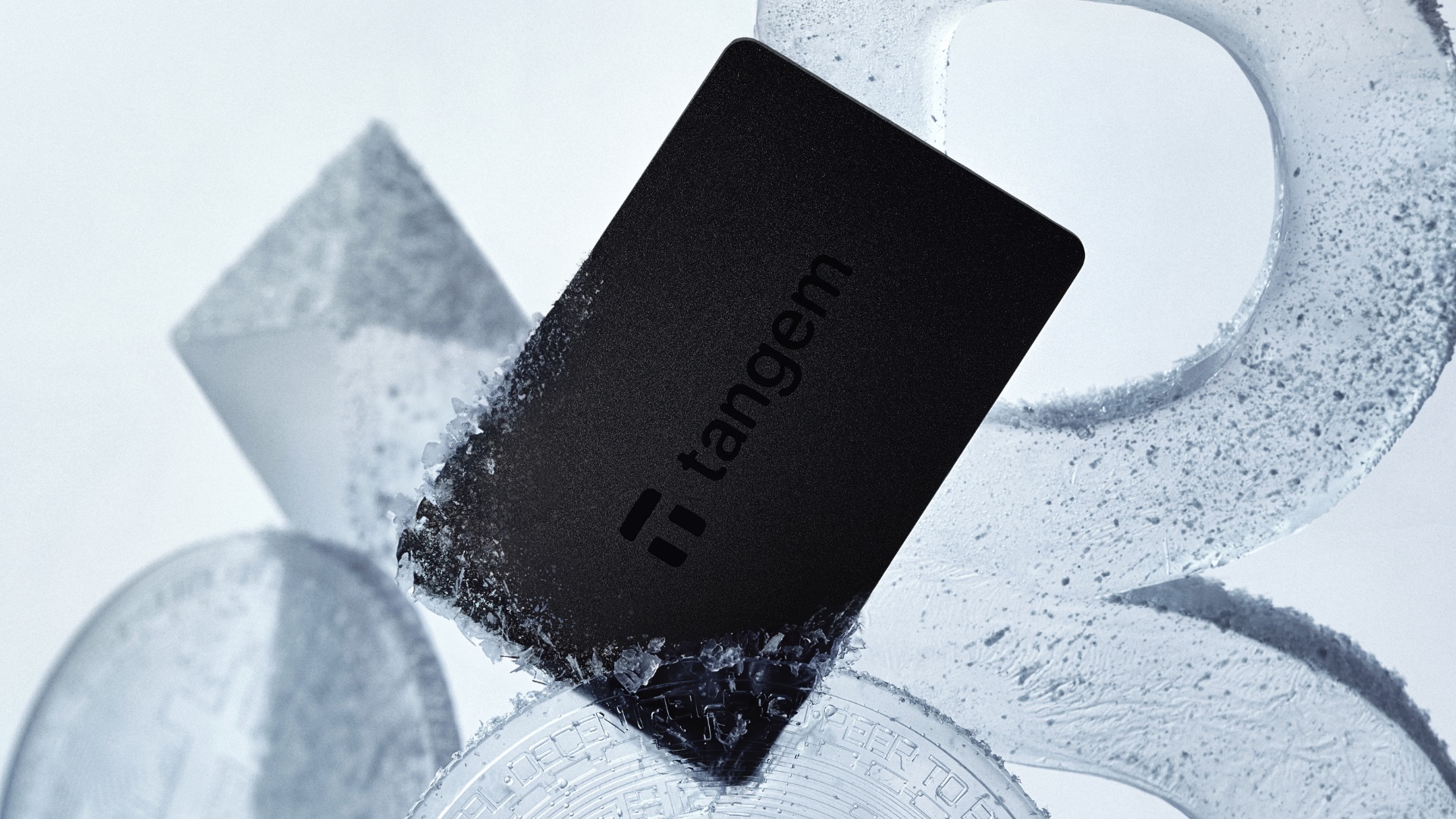
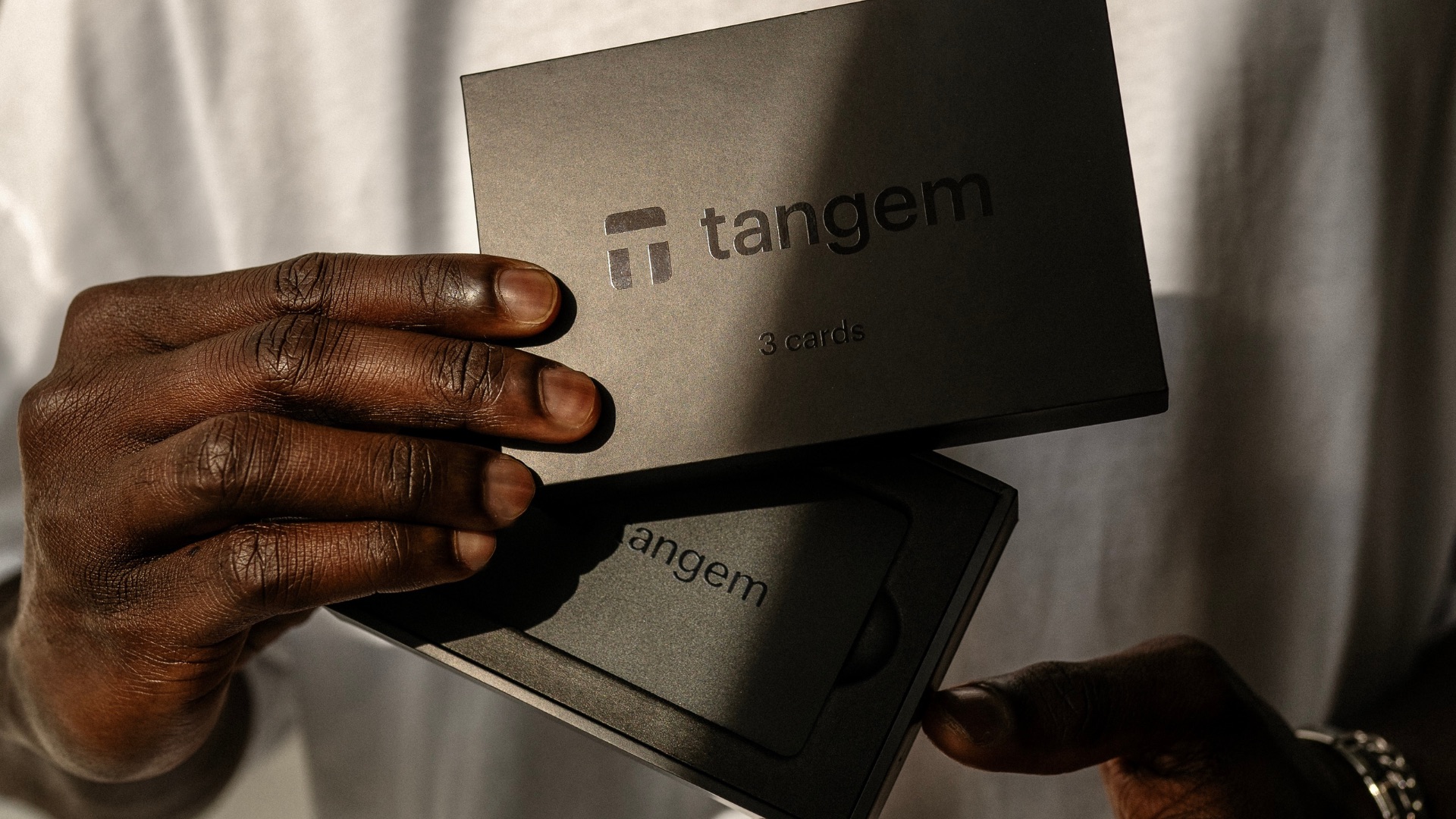
That is why we recommend using two- or three-card packs.
During setup, the cards are securely linked together and function as backup devices. If one card is lost, the remaining cards allow users to continue accessing their funds.
Additionally, users who prefer this option can use a seed phrase to have an alternative recovery method that is compatible with other industry standards.
The key point is understanding that funds are not stored inside the phone or on a specific card — they exist on the blockchain. As long as users maintain access to their recovery credentials, they can restore access to their assets.
What would you say to people who are still afraid of moving their cryptocurrencies away from exchanges and storing them in cold wallets?
They should understand the difference between owning cryptocurrencies and having full control over them.
Exchanges play a very important role within the ecosystem, but when assets remain there, users depend on a third party to access them.
Self-custody gives full control back to the owner. Our mission is to make that transition increasingly simple and accessible for everyone.
Today, everyone is talking about Web3, DeFi, and NFTs. How easy is it to work with all of these directly through Tangem?
It is becoming increasingly seamless.
The app allows users to interact with a wide range of blockchain ecosystems and connect to decentralized applications in a simple way. Users can access swaps, staking, DeFi protocols, and multiple networks without the need for additional devices.
Our goal is to enable users to explore the Web3 world while always maintaining control over their assets and without compromising security.
Which cryptocurrencies or networks have you recently added, and which ones do you plan to add next based on user requests?
Tangem is constantly evolving based on the needs of our community and the ecosystems that are gaining relevance within the industry.
Today, we support more than 16,000 assets across more than 90 blockchain networks, including ecosystems such as Base, Arbitrum, Optimism, zkSync, TON, Hedera, Sei, XDC, and many others that have experienced significant growth in recent years.
We are also continuing to expand the functionality available across these networks, including native staking support for more assets and deeper integration with DeFi applications. Our goal is to provide access to the most relevant ecosystems without compromising the simplicity of use that defines the Tangem experience.
Looking ahead, we listen closely to our community. Many integrations are driven directly by user requests. Our focus is on adding the networks and assets with the strongest adoption, real-world utility, and growth potential, so users can manage most of their crypto activity from a single place.
What new features or exciting developments are coming to Tangem this year?
Without a doubt, one of the most important developments is Tangem Pay.
For years, the industry has focused on solving how to buy, store, and exchange cryptocurrencies securely. However, there has still been a gap between owning digital assets and being able to use them easily in everyday life. Tangem Pay aims to bridge that gap.
The solution allows users to spend their digital assets through an integrated Visa card while maintaining the self-custody philosophy that defines Tangem. We believe this is a major step toward bringing cryptocurrencies into everyday use and turning them into a practical financial tool for millions of people.
Beyond Tangem Pay, we continue working on new blockchain integrations, improvements to staking options, an increasingly complete DeFi experience, and tools that further simplify digital asset management.
Our goal remains the same as it was from day one: to provide the highest level of security possible with an experience so simple that anyone can use it, regardless of their technical knowledge.
Today, what are the biggest challenges when bringing Tangem to new markets?
The biggest challenge is education.
Many people still believe that self-custody is complicated or only intended for advanced users. That is why a significant part of our work focuses on showing that it is now possible to have institutional-grade security through a simple and user-friendly experience.
It is also essential to build local distribution networks, strategic partnerships, and educational content that helps introduce this technology to new users.
And where do you see the project heading globally?
The most exciting part is seeing how self-custody is moving from being a niche tool to becoming something increasingly mainstream.
More and more people are recognizing the importance of having direct control over their digital assets, especially in regions where cryptocurrencies are used for saving, preserving value, or making international payments.
We believe that millions of people will want to have direct control over their digital money in the coming years, in the same way they currently manage their bank accounts or payment apps.
Our goal is to become the simplest and most secure gateway to that future, bringing self-custody closer to everyone, regardless of their previous experience with cryptocurrencies.
Conclusion
As the digital asset ecosystem continues to mature, self-custody is becoming increasingly accessible to the general public. Tangem’s approach focuses on combining simplicity and security to reduce entry barriers and bring cryptocurrencies closer to more users.